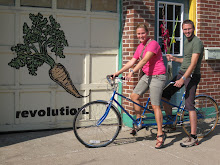
Darjeeling was a little of heaven on earth for all of us. After hectic life in Varanasi, this was the perfect place for some down time,  great views, and relaxation. Getting to Darjeeling takes a bit of time, as it is 3 hours up a mountain, 3 hours of windy, bumpy roads. The hotel had great views, which ended being the only thing that kept us there in the end (no hot water, no water to flush the toilet, and people knocking on our door selling scarves at 7:00 am). The town itself it not big but
 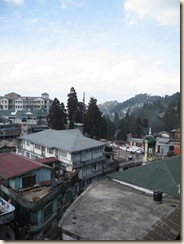 filled with friendly people, fun market stalls, tea shops, and knock off North Face stores.
There was a lot to enjoy in Darjeeling besides the views (though that always helps). The cooler temperatures forced us to buy a couple of warmer things, but usually I used it as an excuse to buy fun Nepali knitwear.
Tibetan Self-Help Refugee Center
There is a large population of Tibetan refugees, as it is close to the  border and a safe place. This wonderful center was started to give those refugees training and capabilities to make a living. Now, after multiple years of being open, it has remained a fantastic safe, productive zone for thousands of refugees. There are rooms for weaving, spooling wool, dying wool, wood carving, knitting, and other handicrafts. There is also a basketball hoop for many of the orphans to play on when they’re not in school. We visited this shop/center and fell in love. We
  talked to some of the people, learned about the handicrafts, and watched as rugs and sweaters were being made. One man, whose name escapes me, was a phenomenal woodcarver and told us all about his woodcarving and the tools we uses. Some of his story was lost in translation, but it seemed to Mike and I that he had come when he lost his parents, when he was very young and had stayed at the center ever since.
Tiger Hill
We took a jeep (after some complications getting and bargaining  for the jeep…I ended up yelling at someone who I thought was being unfair. It was a shortcoming that came with waking up at 4:30 am) up to Tiger Hill to see the sunrise. From this one point you can see three of the five highest peaks. The most prominent being Kangchenjunga (3rd highest in the world) and Everest being the hardest to see (but we saw it!). The sunrise was
  beautiful, but not as beautiful as the sun rising on the mountains. It was absolutely breathtaking and made me a little energized with excitement. It’s just something about
  mountains. We took lots of pictures, hoping some would do the view justice. I know I shouldn’t complain, but it was cold up there! I was all bundled up and still was chilly. I’m not sure I’m ready for even March winter in WI when we come back! We stayed, admiring the mountains until our jeep driver forced us to come down.

Momo Lessons
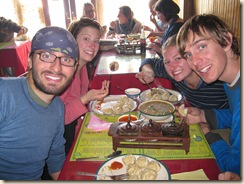
I have found a new favorite food: momos. It is a Tibetan food that is just delicious, so delicious in fact that we all took momo lessons  one morning. It took about three hours from start to finish (we made a lot!) and ended with all we could eat momos and soup. Don’t you worry, we plan on teaching anyone and everyone that wants to learn when we get back! Essentially it is flour/water dough that is professionally wrapped around a mixture of cabbage, onions, ginger, salt, and whatever veggies you want. Then it is all steamed for 15 min. to perfection. You can fry them after that, but steamed are way better, hands down. The woman in the picture you do not know was our main instructor. The one of us eating was at our favorite Tibetan restaurant that we went back to about four times.


Tea
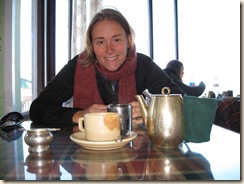
Darjeeling is known for their tea and have many tea houses carrying it. We went and played cards at one shop, only for the electricity to go out at 7 and have to finish by a torch (flashlight). The picture of me is at Glenary’s, the bakery/breakfast place we hit up a couple of times with excellent views. I’d highly recommend it. Pot of tea for 40 Rs (80 cents).

Random Shots:
1. We were in Darjeeling for Republic’s Day, so there was a parade and dance event that we caught glances of.

2. St. Andrew’s Cathedral

3. Monkeys guarding St. Andrew’s Cathedral
4. A cool statue on top of a high building that I got a kick out of


5. Mike and I in the midst of Buddhist prayer flags. The top of Observatory Hill was COVERED with them, quite the sight of color. 6. The flags in action.

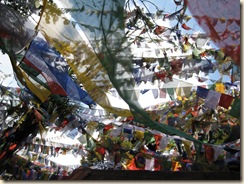
7. A Buddhist temple that we stopped at on the way down from Tiger Hill. (7. the gate, 8. the actual temple)


The Himalayan Zoo and Mountaineering Institute
What a great combination: sweet animals and climbing! My kind of place. These two were interconnected strangely enough, but both absolutely fantastic. The animals were some of the coolest animals I’ve ever seen (especially the birds…talk about colorful pheasants!) and the mountaineer institute was a collection of articles, pictures, materials, maps, dairies, etc. of lots of history making climbs. They even had an entire section on Everest.


The animals: 1. Bullhorn Sheep of some type (can’t remember the name, but Mike took loooots of pictures of it) 2. Himalayan Black Bear 3. Red Panda (Mike’s favorite) 4. Siberian Tiger (we had to go back to the cage to find this one, it was camouflaged well!)